Pages

Showing posts with label Plymouth History. Show all posts

Friday, 28 November 2014

Plymouth Blitz Tours

It's been a long time since our last blog post, so we thought we better make it a good one!

It's been a long time in the planning and now Hidden Heritage have announced one of their latest exclusive tours in the historic maritime City of Plymouth. Launching in January 2015, Plymouth Blitz Tours will be an interactive experience, taking you on walks around the relics of Second World War sites in Plymouth, inspired by the people who were there who have shared their memories and helped us to build a better understanding of what time was like during the war.

In 2011, Hidden Plymouth assisted BBC Spotlight for the 70th Anniversary of the Plymouth Blitz, visiting Maker Camp on the Rame Peninsula, and descending into one of the former underground Public Air Raid Shelters, a true time capsule from the 1940's.
Now, it's time to finally take you, the people of Plymouth and visitors from around the globe with us on a journey into the past.

Proceeds from tours will be going back to The Plymouth Blitz Project, an online archive that was created with strong support from Hidden Plymouth and Steve Johnson at Cyberheritage, who have shared a great deal of Plymouth History to a worldwide audience online, and now exclusively, to those of you who wish to learn more, with history walks taking you on the journey of this great City that rose from the rubble, beginning with A Plan for Plymouth in 1943 to become Britain's Ocean City today.

Our aim has always been to have some form of Plymouth Blitz Experience, and this year we have moved one step closer to making that a reality, just in time for the 75th Anniversary we hope! #PlymBlitz75


Saturday, 18 May 2013

Hidden Plymouth presents Plymouth Interactive History

We had been planning a big event for sometime, so when we found out we could take part in the first ever Plymouth History Festival we were over the moon, & thanks to Claire at the Real Ideas Organisation who welcomed us to host a special event at the fantastic Devonport Guildhall & newly restored Devonport Column that will have just celebrated it's rise back into the community a week earlier. Our original plan was to host it in one of the Palmerston Forts but that fell through due to health & safety reasons, although what we are now hosting the event in has a rich history & with Devonport featuring so much in our research, makes it the perfect venue to host our first major event bringing you the public, closer to your history & heritage.

We hope to bring you some photos from tomorrow's event & welcome your feedback should you attend!


Sunday, 17 February 2013

North Prospect School Air Raid Shelters

During the regeneration of North Prospect in Summer of last year, another two WWII air raid shelters were discovered within days of each other during demolition work on the school. Last documented in 1989, when work on a new playground was halted after groundworkers broke through a roof section of the southern shelter, the smaller of the two, but this time round the larger north shelter had been uncovered too & archaeologists from Exeter were able to document both before their demolition. We managed to grab some exclusive photos from the southern shelter only & what follows is our account, with some fantastic graffiti from the period but very little artefacts left lying around.


Filled in stairwell of the original entrance

Infill through one of the escape hatches

Making the way through to the next section

Section of shelter with roof collapse & toilet cubicles

As you can see, this was one of the squarer type of construction with the precast sections & girders fitted additionally for extra strength at a later date. Some of the girders were found to have a combination British Steel & Earl of Dudley Steel markings on them indicating these were manufactured in the Midlands, although it is thought the concrete sections originate from quarries in Cornwall. One section of the shelter had suffered major roof collapse near to one of the toilet blocks.

Looking down a section of shelter with the passageway to the right leading to entrance

Torchlight shines from the distant passageway

A view showing the steel girders added for extra strength

Crumbling sandstone from the walls of the shelter

Earl of Dudley Steel girder section

The graffiti varied from child's drawings to adult humor & rude sketches, some of which would have shocked the schoolkids of the time & I wonder if the drawings came from older teenagers or adults. Maps of the 2 shelters were sketched onto one section, an almost cartoon sketch of Winston Churchill adorned another, name calling & random signatures could be found in other areas on the walls. For it's size, it contained a fair amount of graffiti & we documented what we could find in the time that we had.

Barrage balloon & banter

Jack

Postbox

Shelter map

Name calling scirbbled out

More examples of name calling

Sir Winston

Pat Brookes

Luftwaffe aircraft

Mary had a little lamb....the rude version 1940's style

No.2 Class Section
Candle with pin through found atop a girder just inside the entrance to the shelter

Although the pencil sketches were great in number, the artefacts were much fewer with by far the best being a candle made of pigs fat with a pin through for the holder. This was found on top of the girder immediately next to the entrance. This would have seen use during the raids no doubt. We were told a couple of years before they were uncovered that there was a shower block in one of the shelters but looking the archaeologist's plans, there was no evidence to support this. 

Shelter sections piled up awaiting disposal from the northern playground shelter

Another view of the shelter sections

Notice the heras fencing in the foreground covering the exposed sections of air raid shelter in the northern playground

A few days later, we were passing on a lunch break from work when we noticed a pile of shelter rubble & pulled over to grab a few photos on the camera phone, making them probably the last photos of the now demolished shelters. There we have it, another 2 have gone but how many remain is anyone's guess!

Were you a child who sheltered here during WWII? Do you have a member fo family who attended the school with memories of the Plymouth Blitz? If so please get in touch as we would appreciate any stories to add to the archives. Contact us via info@hiddenplymouth.co.uk


Sunday, 3 February 2013

Hidden Plymouth presents A Way Of Life 2013

Our rescheduled event that was originally due to happen at the end of November takes place Saturday 9th February from 5pm-9pm at Maker Junction, Maker Heights.

Special guests on the evening will be Steve Johnson from Cyberheritage giving one of his infamous Q&A sessions - possibly the most Plymouth facts you will ever get to hear in the space of an hour.

Laura Quigley - Author of Bloody British History: Plymouth will be giving us a talk about Plymouth spies as part of forthcoming book.

Barbara Marlow - Founder member of Devon Family History Society, & author of Rags to Riches & creator of latest project Family History Uncovered.


Tuesday, 29 January 2013

Walls of History

At many of the historic military sites & air raid shelters, we have been lucky enough to document pencil graffiti & etchings, some dating back more than 100 years. Written on whitewashed & eroded walls - names, company units, humour & drawings fill an otherwise vacant space leaving a clue for us to hopefully build a better picture & history of the location.

WWII graffiti beneath Bovisand Fort casemates

Graffiti dating back to November 1914,  four months after the start of World War I

Dedication to a Captain on the walls of a former prison cell


With many sites documented now lost to demolition, these images live on with an important purpose - a reminder of the occupants of the time. What happened to the people in later years? The Private who etched his name in pencil at an underground fuel store in 1914 for example - Was he to see battle in the fields of the Somme? Or the ladies of the NAAFI, names written in chalk adorning a section of school air raid shelter - What was to be their fate during the remainder of the Plymouth Blitz?

A prisoner in a fort prison cell left his mark in December 1914, where it still remains evident today

Initials inside a fort tunnel

WWII graffiti months before the German surrender

Air raid shelters around the city have thrown up some of the finest pencil scrawls from shelters around the UK, with sketches including Churchill, Hitler, Luftwaffe aircraft, names & addresses. Many quality drawings adorn humid walls, the artist unknown in many cases, but leaving their historic imprint for future generations to discover & document, making otherwise unseen places accessible to the public via photographs. Amount of graffiti in shelters does vary with one containing very little left, or drawings that had simply worn away through time. Or, in the case of a shelter we documented last year that had the most drawings I have personally seen, stunningly preserved & after 4 hours of documenting what we found, the chances are there will still be more that we had missed, waiting to be discovered by the next researcher.


HMS Javelin

Support Plymouth Warships Week

Luftwaffe dropping parachute bombs

Crossed out scrawls

Mary had a little lamb....

Victory to the British Empire - We did win!

I often wonder what the person was experiencing at the time of their scrawls in the shelter. Were they filled with fear of the chaotic bombardment that rained on the city? Or calm in their thoughts with the mind being occupied with their drawing? There are, in my opinion, works of art on some of the walls showing true skill of the person sketching & must have taken a great amount of effort & time. We look forward to bringing you more findings over the coming months. If you have any photos taken from other locations please feel free to get in touch!

Recognise this chap?

National Fire Service

Sinister looking gas mask sketch

Standing almost three feet high, this stunning depiction of a worker

Boot sketch

Look out for another feature on the blog coming soon.....Shelter Art of WWII.


Saturday, 19 January 2013

Plymouth History - Get Involved!

Welcome to our first post of 2013, the year we take Hidden Plymouth to the next chapter & get more interactive with our readers via exhibitions, talks & we are now welcoming more public contributions to our research & online archive. In collaboration with Cyberheritage, we proudly bring you Plymouth Interactive History after months of research & planning, uncovering new stories & photos to add to those already collated in the past by local historians, researchers & archivists before us. Our new online archive will be available to the public from late February, as part of a brand new worldwide resource website launching right here in Plymouth with thousands of images to view. We are currently archiving a collection of over 10,000 slides & photos spannning 50 years that was kindly donated to us. Many of the photos feature old views of Plymouth showing the change throughout the years.


We have a number of drop-in sessions at selected locations in & around Plymouth throughout 2013 & offer a free archiving service of old documents, photographs, negatives & slides. For further information on dates & venues we are coming to please drop us an e-mail to info@hiddenplymouth.co.uk or alternatively, we can arrange for you to pop into our office by appointment only. In turn, these will also be deposited in community & national archives making them accessible to as many people as possible to gain a better understanding of their local history.

Plymouth Interactive History is your history, your stories & visual memories documented for the digital age. It offers a wealth of resources available electronically & to a worldwide audience, that can help in many areas in assisting future research such as your family tree or local history education for schools providing the next generation with tools to research their past & learn about their heritage.

Our first major project is Faces of Plymouth Blitz featuring previously undocumented stories from those who witnessed it first hand. We have had some amazing feedback from Plymothians since our call for stories of WWII memories to add to the archives. As you can imagine, it is a very lengthy process collating all the information & we put out another call for you to step forward take your part in a little bit of Plymouth history. We are in much need of contributions where history is lacking at some vital sites in & surrounding the city during WWII & urge you to get in touch if you have any information on the following areas under ongoing investigation;


  • Home Guard in Plymouth & surrounding districts including the highly secretive Auxilliary Units AKA Churchill's Resistance. 
  • Heavy Anti-Aircraft Gun Batteries
  • ARP Wardens & Firewatchers, also Fire Guard Messengers who were volunteer children aged between 14-18 
  • Air Raid Shelters - How many of you have an Anderson Shelter in your garden? Do you have memories or stories from the times in air raid shelters? Especially looking for further info on the following air raid shelters that have been lost to demolition; Ker Street, Devonport - Pomphlett Quarry Tunnel - Victoria Park - Mount Wise area - North Prospect School - York Street - Devonport Market & Pounds House ARP Control Centre - Millbay Laundry
  • Barrage Balloon sites
  • Family members who used Nissen Huts for temporary accommodation or shops
  • Were you a Blitz baby? Get in touch!


Please get in touch via History Plymouth


We leave you with a photograph recently sent to us from a reader & featured on Cyberheritage....a rare photo showing the bombing of St Andrews Church on March 21st, 1941. Original source of the photograph is unknown therefore please contact us if you hold the copyright & we will gladly credit in due course.


.


Monday, 5 November 2012

Palmerston's Follies

Whether out on a boat in Plymouth Sound, walking the coastal path around Mount Edgcumbe or driving along the A38, you're not too far away from one of Palmerston's Follies, but what exactly are they & what were their purpose?
Hidden-Plymouth-Forts
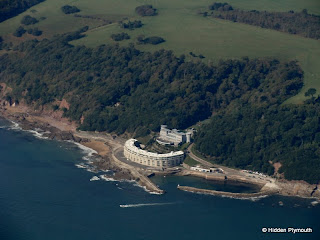
Picklecombe Fort on the Western Approach of Plymouth Sound


A ring of Victorian era defences surround Plymouth in the form of impressive looking forts & gun batteries, with some sites being remodelled from earlier Napoleonic fortifications. Those built within the era of the Prime Minister at the time, Lord Palmerston, came about after fears of a French invasion as reported in the 1860 Royal Commission on the Defence of the United Kingdom. Lord Palmerston championed the idea of strengthening coastal defences & harbours around the UK. It was a costly exercise - the greatest ever spent on building fixed defences during peacetime, & by the time of completion, advances in gun technology had rendered the forts out of date. Hence they became known as Palmerston's Follies.

Hidden-Plymouth-Palmerston-Forts
Tregantle Fort - Still in active military use as a firing range


The Plymouth Defences were built with intention of defending the threat of a Naval assault by the French on Plymouth Dockyard. Any modern visitor to Plymouth via sea will often ask the question of what structures they are seeing as they enter Plymouth Sound. Picklecombe Forts lush apartment conversion greets visitors as they reach the Breakwater, where once inside, the impressive dark & daunting look of Breakwater Sea Fort & the mighty combined fortifications of Bovisand & Staddon Battery at Staddon Heights can be seen at their best. Further inland, Stamford & Staddon Forts complete the south-eastern side Reaching Drake's Island, Palmerston era additions can be seen in the form of an arc of stone casemates with protective iron shields that housed twenty-one 9 inch guns.

Hidden-Plymouth-Palmerston-Forts
Breakwater Fort

Hidden-Plymouth-Palmerston-Forts
Fort Bovisand & the earlier Staddon Heights Battery

Hidden-Plymouth-Palmerston-Forts
Drake's Island Casemates


Plymouth's Northern Defences stretch from Efford Fort all the way to Ernesettle Battery overlooking the Tamar. Sandwiched roughly in the middle is Plymouth's best preserved Palmerston, Crownhill Fort which is now utilised by businesses & wedding venue with occasional open days to the public. All of the Northern Defences are occupied with businesses or Plymouth City Council in-situ with the exception of Ernesettle Battery which is MOD, & Agaton which is a VOSA Test Station.

Efford Fort to the left overlooking the North Eastern Approaches

Cannons in-situ at Crownhill Fort

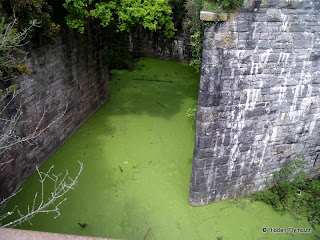
Murder Hole Ditch at Efford Fort being reclaimed by nature

Agaton Fort Gatehouse - No Access


On the Cornish side around the Rame Peninsula, coastal gun batteries & forts snake the coastline from Garden Battery at Mount Edgcumbe to Scraesdon Fort at Antony & although some were lost to demolition in the 1970's, there has been excellent works to preserve their status from current tenants who look after the structures including the Rame Conservation Trust, Mount Edgcumbe Estate, Defence Estates, Ministry of Defence & all the owners of converted sites such as Cawsand, Picklecombe & Polhawn Forts & Whitsand Bay Battery which is now a holiday park.
Hidden-Plymouth-Palmerston-Forts
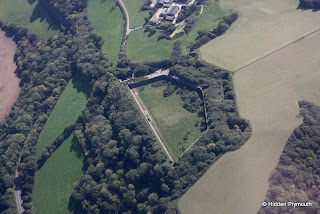
Scraesdon Fort from above

Hidden-Plymouth-Palmerston-Forts
The grand stone entrance to Tregantle Fort

Hidden-Plymouth-Palmerston-Forts
Flooded moat at Scraesdon Fort

A handful of forts have suffered vandalism & theft in recent years including Bovisand & Drake's Island, which had renovation & refurbishment projects put on hold due to the recessions, but recent rumblings on the grapevine are positive & look good for the future. One things for sure If we won the lottery jackpot, we would certainly offer to buy it straight from the owner & reopen it to the People of Plymouth....a name? ooooh maybe Cultural Adventure & Heritage Centre of Plymouth....or is it forward thinking enough for the Plymouth vision of a modern city?......school trips, tourism, local produce brought to the island by boat, open days, jobs with old trade skills brought into much needed use....must...stop....dreaming! Oh & did you know that Drake's Island is actually the cap of an extinct volcano? Awesome history that Plymouth has don't you agree?

Thankfully some of the forts have been much better cared for & the conversions to apartments & holiday homes at Cawsand & Picklecombe Forts are stunning. Okay, so they may be a little out of our price range & we can't even afford a second home but we still appreciate their history & the imposing look these structures have. Polhawn Fort is now primarily a wedding venue, a place we considered for our own wedding, & in our opinion this has to be one of the best wedding venues in the South West. The time, money & priceless effort that has gone into the restoration of the fort is phenomenal & we will feature this in a forthcoming series on the blog.

Hidden-Plymouth-Palmerston-Forts
Inside one of the immaculate bedrooms - Polhawn Fort

Hidden-Plymouth-Palmerston-Forts
TV replaces the cannon - note the original racer rail for the cannon

Hidden-Plymouth-Palmerston-Forts
One of my favourite spiral staircases - stunning workmanship


Over a series of blog posts, we will take a look at each site in detail, including the demolished gun batteries around Plymouth & the surrounding area. A strong focus point of our research will be to build a history of Military Units & stories from personnel who have their own memories of a particular site & we welcome any information of historic value. Graffiti from years back adorn many of the forts with units such as the Royal Marines, Royal Engineers, The Parachute Regiment & even the SAS. Feel free to get in touch if you recognise any of the graffiti featured in the forthcoming gallery - info@hiddenplymouth.co.uk

Hidden-Plymouth-Palmerston-Forts
1939 graffiti from a Commando veteran

Hidden-Plymouth-Palmerston-Forts
Until next time....another spiral staircase in a Plymouth Fort - we're off to see what's down there